Jebel Ali Racecourse Redevelopment: What Investors Should Know
Large master-planned communities often define the next phase of Dubai’s growth. As the city continues expanding beyond its established districts, large-scale land redevelopment is shaping the direction of future infrastructure and residential planning.
The planned Jebel Ali Racecourse redevelopment is one of the projects expected to reshape a significant part of Dubai over the coming decade. Rather than a typical residential project, it's a full district transformation aligned with long-term urban planning.
This article explains what the project is, how it is planned, and why investors are watching the area. The goal is not to promote the project, but to understand how developments like this typically behave once planning moves into real construction.
Table of Contents
1. What Is the Jebel Ali Racecourse Redevelopment?
2. Location and Connectivity
3. The 10-Minute City Concept
4. Why Investors Are Watching This Area
5. Potential Risks and Considerations
6. Long-Term Outlook
What Is the Jebel Ali Racecourse Redevelopment?
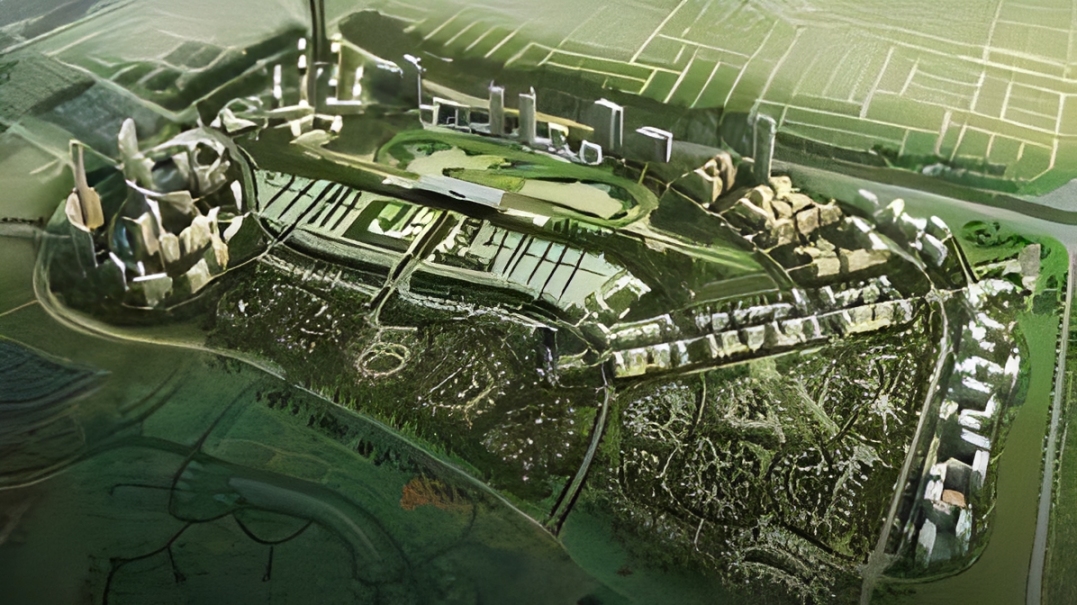
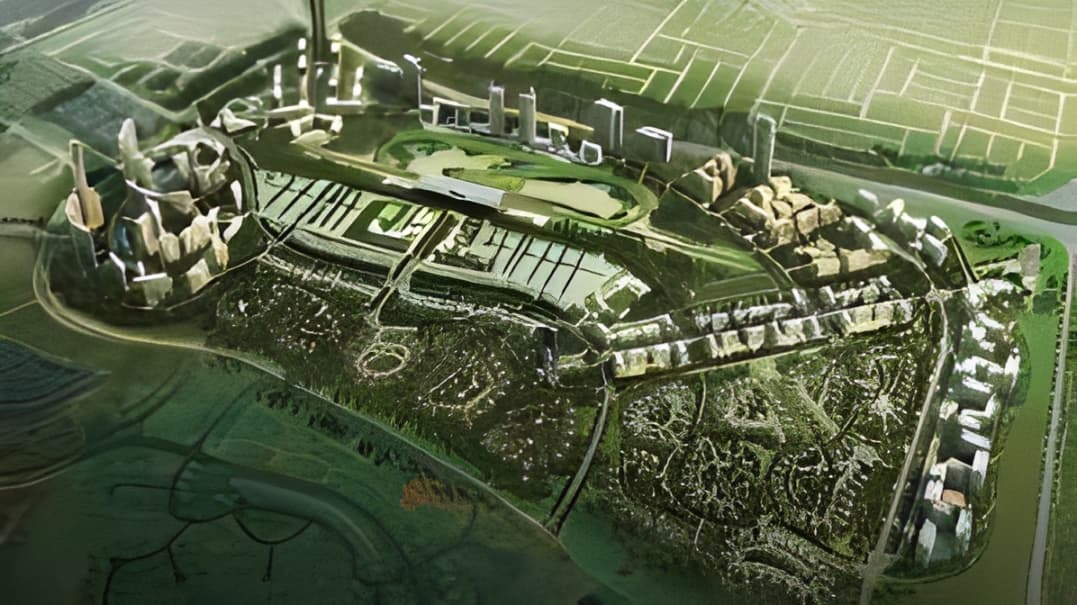
The Jebel Ali Racecourse redevelopment is a large-scale urban transformation project covering approximately 5 square kilometres of land in Dubai.
The project is being developed by A.R.M. Holding, a UAE-based investment group, with the master plan designed by Bjarke Ingels Group (BIG), an international architecture firm known for large-scale urban developments and sustainability-focused planning.
Instead of replacing the racecourse entirely, the plan preserves the historic racetrack as a central feature while surrounding it with new residential and mixed-use neighbourhoods.
The concept has been described as an "archipelago of urban islands in a sea of green."
The master plan includes eight walkable neighbourhoods connected through green corridors and public spaces.
At the centre of the development will be a 1.5 square kilometre park, comparable in scale to major international urban parks. The park is planned to include lakes, walking paths, landscaped areas, and recreational zones.
The district is designed as a mixed-use environment, combining:
- Residential communities
- Cultural spaces
- Hospitality developments
- Retail areas
- Public amenities
Construction is expected to begin in early 2026, with development planned in phases over approximately ten years.
This places the project firmly in the category of early-stage development, where long-term planning matters more than short-term activity.
Among Dubai's new developments, this project stands out due to its scale and its role in long-term urban expansion rather than immediate residential supply.
Location and Connectivity
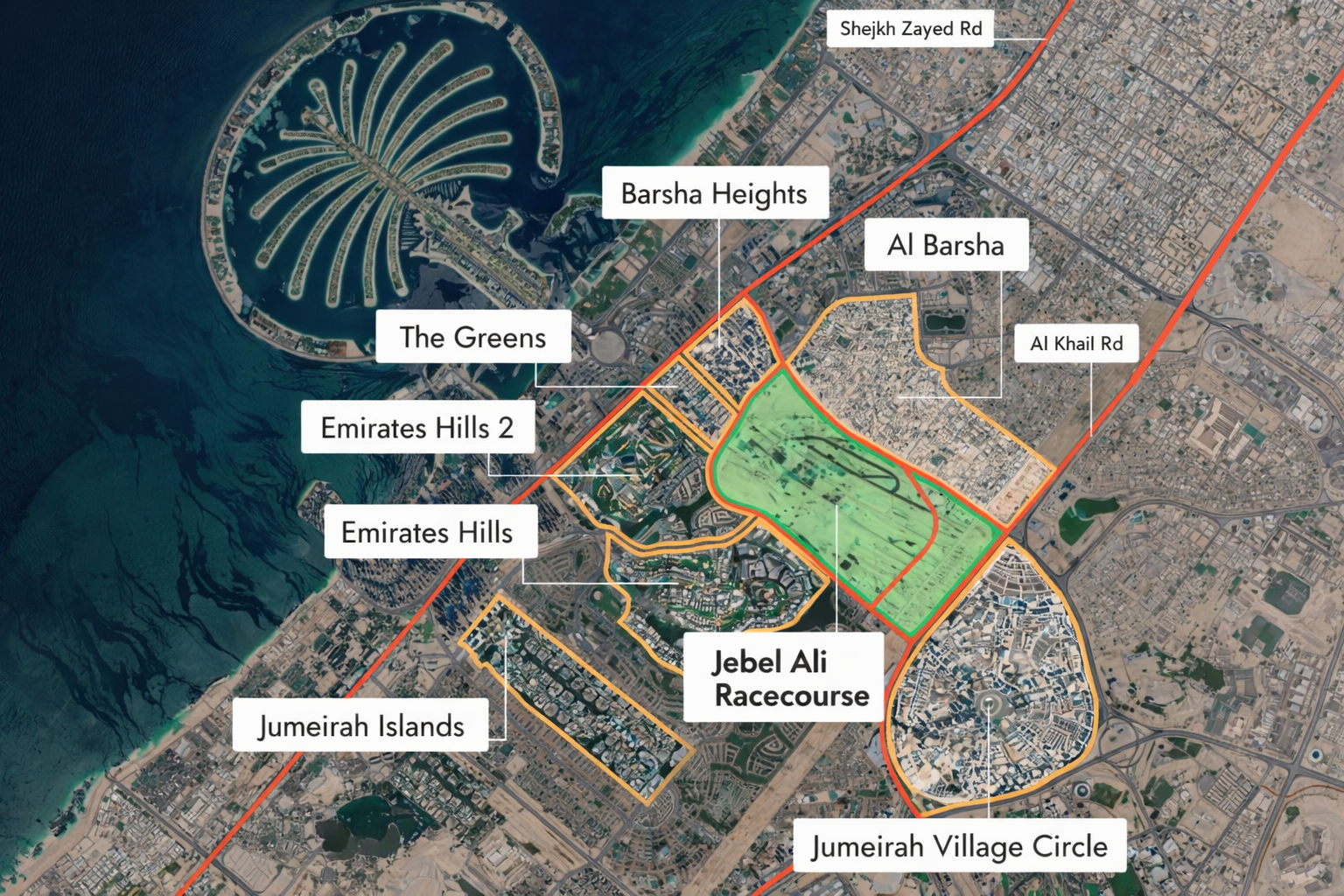
The redevelopment site is located in Al Thanyah Second, positioned between major transport corridors.
The area is bordered by:
- Sheikh Zayed Road (E11)
- Mohammed Bin Zayed Road (E311)
This positioning allows direct road connectivity to several established districts.
Travel times are estimated at approximately:
- Dubai Marina and Downtown Dubai: 10–15 minutes
- Al Maktoum International Airport: Around 20 minutes
- Expo City Dubai: Easily accessible via E11 and E311
This location places the project within one of Dubai’s expanding southern corridors.
Investors often look at areas where major infrastructure already exists or is scheduled for expansion. In this case, proximity to Expo City Dubai and the planned expansion of Al Maktoum International Airport add strategic importance.
The airport expansion, valued at approximately $35 billion, is expected to increase activity across the surrounding districts over the coming decades.
Because of this, the Jebel Ali corridor is increasingly viewed as one of the future areas in Dubai likely to see long-term population growth.
Unlike isolated developments, this project sits within a corridor already transforming.
The 10-Minute City Concept
One of the defining aspects of the redevelopment is its 10-minute city design.
The district is planned so that residents can reach essential services within approximately ten minutes on foot or by bicycle.
These services include:
- Schools
- Healthcare facilities
- Retail areas
- Offices
- Leisure spaces
The intention is to reduce dependence on car travel while improving daily accessibility.
The plan also incorporates pedestrian-focused design elements such as:
- Shaded walkways
- Cycling networks
- Landscaped public spaces
- Car-free zones in selected areas
Another important element is microclimate planning.
The development aims to create outdoor spaces that are up to 5°C cooler than surrounding urban areas through:
- Native landscaping
- Tree cover
- Water features
- Shaded boulevards
- Passive cooling techniques
This approach reflects broader planning priorities under the Dubai 2040 Master Plan, which focuses on sustainable urban expansion.
Smart mobility is also expected to be integrated into the district.
Proposed systems include:
- Automated shuttle transport
- App-based mobility services
- Reduced reliance on private vehicles
These features align with the long-term goal of creating walkable Dubai master planned communities.
Why Investors Are Watching This Area
Projects of this scale typically attract attention because they reshape entire districts rather than individual neighbourhoods.
Investors often look at large redevelopment areas when evaluating Dubai investment areas with long-term growth potential.
The Jebel Ali Racecourse redevelopment sits within a corridor influenced by several major factors:
- Expo City development
- Al Maktoum Airport expansion
- New infrastructure investment
- Population growth planning
Under the Dubai 2040 Master Plan, Dubai’s population is projected to reach approximately 7.8 million residents by 2040.
This growth requires new urban districts designed around modern planning standards.
Large master-planned communities often take years before their full vision becomes visible on the ground. Early phases typically focus on infrastructure and foundational construction.
Because construction is expected to begin in 2026 and continue over roughly a decade, the project represents a long-term growth area rather than a short-term opportunity.
Investors often evaluate projects like this based on:
- Infrastructure timelines
- Population movement
- Transport expansion
- Employment hubs nearby
The location's connection to Expo City and Dubai South strengthens its position within Dubai’s southern expansion corridor.
As infrastructure develops, early buyers in similar districts often benefit from gradual area maturity.
However, these gains typically occur over extended holding periods rather than short cycles.
Potential Risks and Considerations
Like most large-scale developments, the Jebel Ali Racecourse redevelopment carries certain uncertainties that investors should understand.
One factor is timeline length.
Projects covering several square kilometres rarely progress quickly. Infrastructure installation, zoning approvals, and phased construction can take many years.
Investors entering early-stage developments usually need a long-term holding strategy, often in the range of five to ten years.
Another factor is market absorption.
Large developments introduce significant housing supply over time. In emerging districts, this can sometimes lead to fluctuations in rental performance during early years.
Areas such as Dubai South and surrounding corridors have already experienced periods of uneven rental growth as new supply entered the market.
Future infrastructure timing is another consideration.
While major projects such as airport expansion and transport improvements are planned, delivery schedules may extend over many years.
Investment outcomes often depend on how closely infrastructure development aligns with residential growth.
This is typical across Dubai master planned communities, particularly in emerging corridors.
Understanding these timelines helps investors make realistic decisions.
Long-Term Outlook
The Jebel Ali Racecourse redevelopment represents a long-term transformation rather than a short-term market cycle.
Its scale and planning approach align closely with the Dubai 2040 Master Plan, which focuses on:
- Expanding green spaces
- Creating walkable districts
- Supporting population growth
- Reducing transport pressure
- Developing new urban centres
As Dubai continues expanding, large redevelopment districts are expected to play a major role in accommodating future residents.
Projects of this type typically move slowly in early stages but gradually define new urban zones once infrastructure is established.
For investors studying future areas in Dubai, developments like the Jebel Ali Racecourse redevelopment provide insight into how the city is planning its next phase of growth.
Understanding projects at this stage helps investors evaluate long-term positioning rather than reacting to short-term market trends.
Large redevelopment districts rarely deliver immediate results, but they often shape the structure of the city over decades.
Planning to Buy Property in Dubai from Overseas?
Infinity Realty UAE assists international investors with secure remote transactions.
Our services include:
✔ Verified property recommendations
✔ Rental yield analysis
✔ Developer verification
✔ Remote documentation support
✔ Golden Visa planning
✔ End-to-end purchase assistance
👉 Browse investment-ready properties: Ready Properties
👉 Explore off-plan opportunities: Off-plan Properties
👉 Contact our advisors: Expert Property Advisor
Disclosure:
This article is for informational purposes only. Project details and timelines are based on publicly available information and may change. While Infinity Realty specialises in Dubai property advisory, investors should conduct independent research before making decisions