Dubai Real Estate and the Geopolitical Storm: Sentiment Shock or Structural Risk?
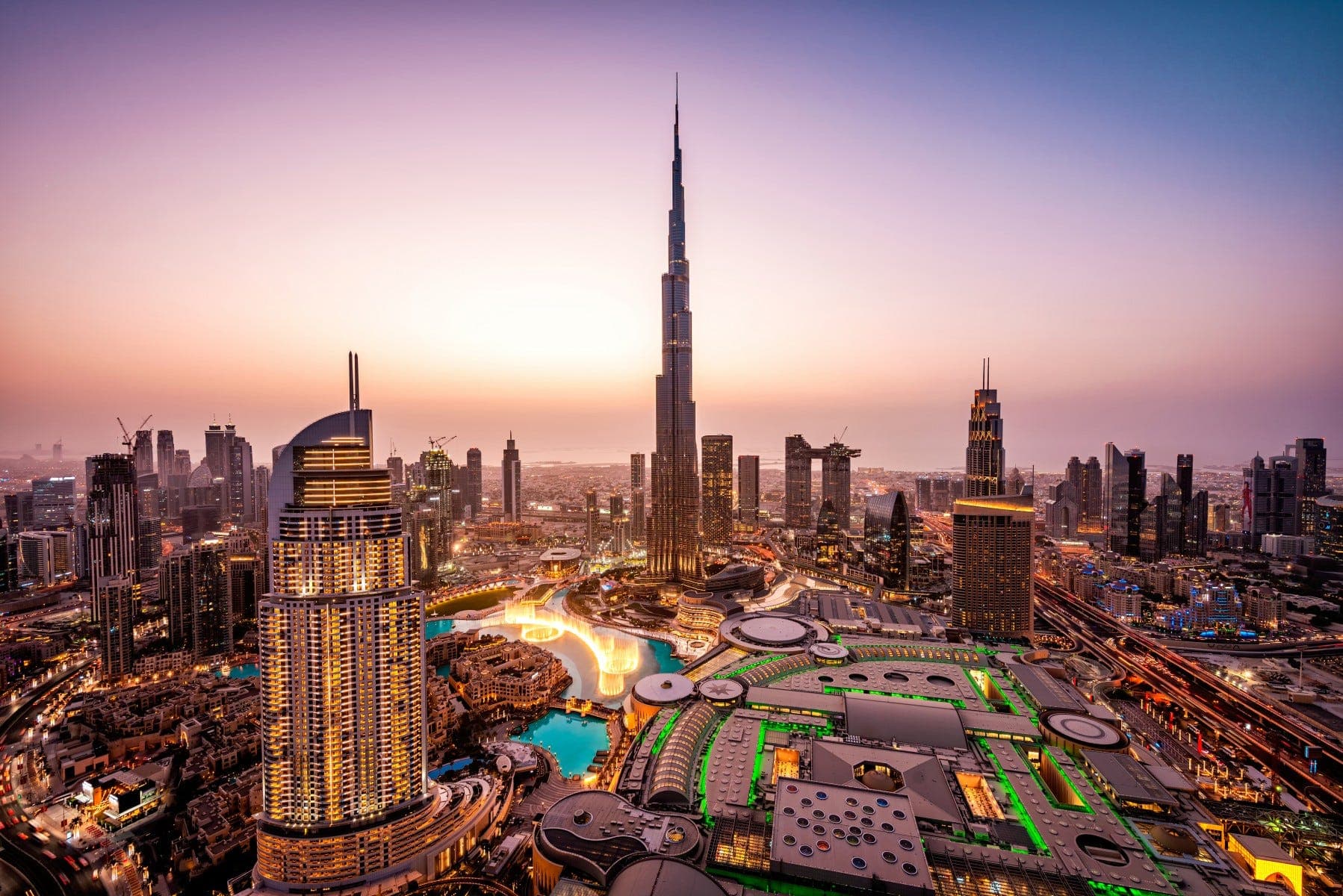
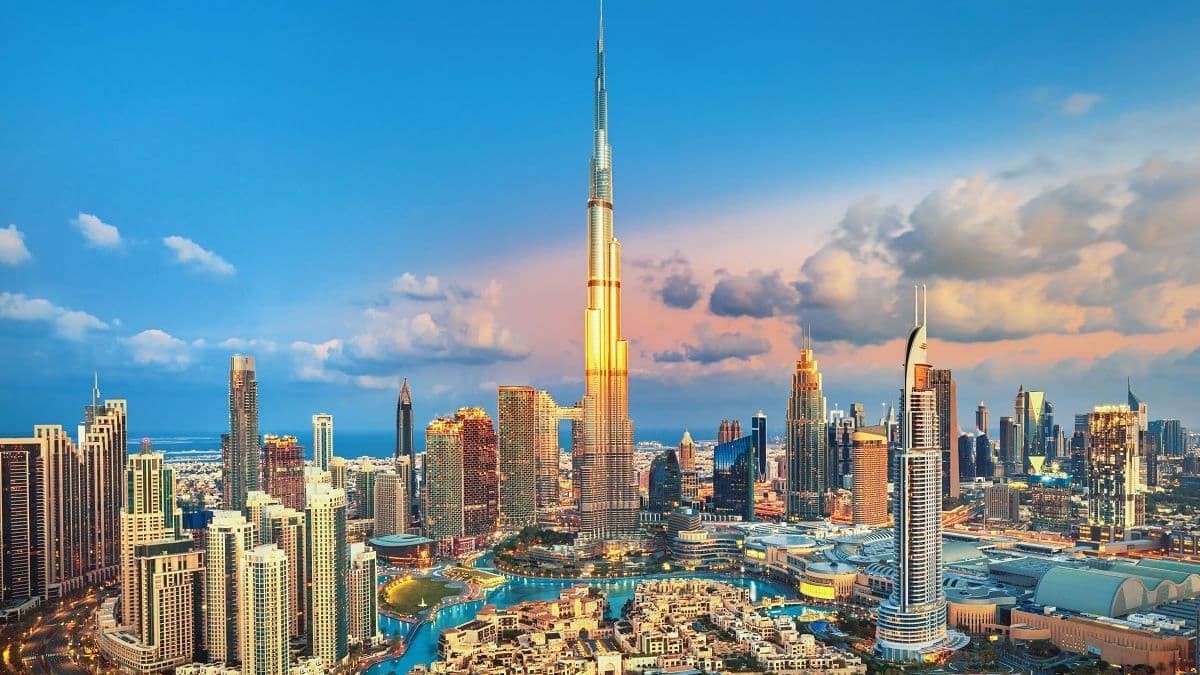
Dubai's real estate market has entered its most scrutinised chapter yet. Missiles have been intercepted over the Gulf, the stock market fell 21% in five trading sessions, and international headlines declared a crisis. But beneath the noise, AED 120 billion in property deals closed in Q1 2026. The fundamentals, it turns out, are still standing.
The Shock That Changed Everything
It began with a drone. Then debris landed near Palm Jumeirah. Within hours, footage from near the Burj Al Arab was circulating globally. For the first time in its modern history, Dubai was not just adjacent to regional conflict. It was inside it.
The sequence of events in late February and early March 2026 shook a city that had spent two decades perfecting the art of feeling untouchable. The US-Israel-Iran conflict escalated sharply, with intercepted missile debris falling near some of Dubai's most iconic addresses. Dubai International Airport faced intermittent closures due to drone activity. The Strait of Hormuz, the artery through which 20% of global oil flows, became a flashpoint for maritime uncertainty.
For the first time in its modern history, Dubai was not just adjacent to regional conflict. It was inside it.
The Dubai Financial Market reacted instantly. The real estate index shed 21% in just five trading sessions, erasing all of its 15% gain from 2025. Emaar Properties, the bellwether of Dubai property, fell more than 25%. The exchange itself shut for two consecutive sessions, a move so rare it underlined just how seriously authorities were treating the moment.
This was the sentiment shock. What happened next is the real story.
The Market vs The Headlines
There is a critical distinction that every investor needs to understand right now: the stock market and the physical property market are two very different animals.
Equities price in fear. They move in seconds, react to tweets, and discount forward-looking risk at lightning speed. Physical property moves on fundamentals: jobs, population, yields, supply, and the simple human need for a place to live and do business.
When that drone footage circulated, the DFMREI fell off a cliff. But the Dubai Land Department's transaction data told a different story. Goldman Sachs confirmed that transactions dropped 37% year-on-year and 49% month-on-month in the first 12 days of March. That is a significant pause. But here is the context: Q1 2026 still closed above AED 120 billion in total transaction value. January 2026 alone recorded AED 72.4 billion in sales, the highest single monthly total in Dubai's history.
Key Data at a Glance
AED 120B+ | Q1 2026 Transactions | Record quarter despite conflict |
21% | DFMREI Drop | Stock market: sentiment shock |
3% YoY | Physical Price Fall | Far below equity market decline |
The divergence is striking. Stock markets repriced risk in days. Physical property barely flinched. Median property prices declined by approximately 3% on an annual basis, with selective discounts of 10-15% in certain mid-market and high-profile segments. That is not a crash. That is a pause.
Equities reflect tomorrow's fears. Property reflects today's reality. In Dubai, today's reality is still 6-9% rental yields and a population crossing 4 million.
The Fundamentals That Hold
Every crisis reveals which markets are built on sand and which are built on stone. Here is what the data says about Dubai's foundations in March 2026.
Rental Yields That Global Cities Cannot Match
Dubai's gross rental yields sit at 6-9%, with established mid-market communities like Jumeirah Village Circle reaching 8.5%. Compare that to London at 3.5% or New York at 3.9%. For income-seeking investors, those numbers do not change because of a geopolitical event. They are structural. They are why capital keeps coming.
A Cash-Heavy Buyer Base
Unlike many global property markets where buyers are leveraged to the hilt, Dubai's market is overwhelmingly cash-driven. This means sellers are not forced into distressed sales because of margin calls or mortgage pressure. It creates a natural floor beneath prices during periods of uncertainty.
The Ultra-Luxury Segment Is Not Blinking
In January 2026 alone, 990 homes priced above AED 10 million were sold. During the third week of March, at the very peak of geopolitical escalation, an Aman Residences transaction still closed. The ultra-high-net-worth segment, those with family offices, diversified global portfolios, and long time horizons, are not sellers in a crisis. They are buyers.
Government Firepower
The UAE Central Bank moved quickly, introducing an AED 1 trillion liquidity support package to maintain banking system stability. GDP growth for 2026 is still projected at 5.6%, underpinned by non-oil expansion and sustained capital inflows. The UAE also reaffirmed its USD 1.4 trillion investment commitment to the United States, a sovereign signal of long-term global engagement.
S&P Says Stable
Despite everything, S&P reaffirmed the UAE's AA/A-1+ sovereign credit rating with a stable outlook in March 2026, citing strong fiscal buffers and consolidated net assets equivalent to 184% of GDP. When the rating agencies are not panicking, investors should take note.
The Honest Risks
This is not a blog that will tell you everything is fine. There are real risks, and a credible advisor must name them.
• Oversupply is a pre-existing vulnerability. Approximately 120,000 new residential units are scheduled for delivery in 2026, though realistically only around 48% are expected to actually hand over on time. If expat inflow slows due to prolonged instability, absorption of this supply becomes harder.
• Citi has flagged population growth could slow to 1% in 2026, versus 4% in recent years. Population drives housing demand. A sustained slowdown here would be the most consequential structural risk.
• Moody's forecasts a moderate price correction beginning in late 2026 due to the supply wave, particularly in the mid-market apartment segment where prices have already dipped around 3% year-on-year.
• Tourism uncertainty is real. Industry estimates suggest 23-38 million fewer visitors could translate into a USD 34-56 billion decline in tourism revenues if instability persists, with the most direct impact on short-term rental properties in tourist-heavy districts.
• Short-term resale activity has collapsed to just 4% of transactions, down from 25% earlier. Investors who need liquidity quickly are discovering it has dried up. Dubai property has always been a long-game asset. Right now, that truth is being reinforced sharply.
Dubai property has always been a long-game asset. Right now, that truth is being reinforced sharply.
What History Tells Us
Dubai has been here before. Not with missiles, but with existential market questions.
In 2008, prices fell 50-60% in what was a genuine structural correction built on reckless speculation and zero regulatory oversight. The recovery took years, but it came, and it came with a stronger, more transparent, more institutionalised market.
During COVID-19, the world assumed tourism-dependent Dubai would collapse. Instead, the market recovered in 12-18 months, faster than almost any comparable global city, on the back of bold visa reform, business-friendly policy shifts, and a flood of global HNWI migration.
During the Russia-Ukraine war, European capital that had no obvious destination found Dubai. Transaction volumes spiked as wealthy Russians, Ukrainians, and spooked European investors sought a neutral, tax-free, legally sound alternative.
The pattern is consistent. Geopolitical events slow decision-making for 48-72 hours, pause some buyers for weeks, and ultimately redirect capital toward Dubai rather than away from it. The current conflict is unprecedented in its directness. But Dubai's response toolkit, government liquidity, visa incentives, developer discipline, and sovereign financial strength, is also more sophisticated than it has ever been.
Where the Smart Money Is Moving
For buyers sitting on the sidelines right now, the question is not whether Dubai will recover. The question is whether you will be positioned when it does.
What disciplined investors are doing today:
• Targeting secondary market, completed units in prime areas. Palm Jumeirah, Emirates Hills, and MBR City recover fastest from sentiment shocks and carry the least oversupply risk.
• Focusing on developer credibility. Emaar and Aldar have the balance sheets, government backing, and delivery track records to weather construction delays or funding tightening. Smaller developers face more risk.
• Looking at distressed exits. Some investors who bought speculatively are now offering at 10-15% below market to exit quickly. These windows do not last long.
• Holding completed income-generating assets. With occupancy rates strong and yields at 6-9%, rental income provides a meaningful return while the market recalibrates. Panic-selling a cash-flowing property into a sentiment-driven dip is rarely the right move.
• Watching for government policy triggers. In past crises, the UAE government has responded with Golden Visa threshold adjustments, transfer fee reductions, and new residency categories. Each announcement historically triggered a sharp demand response. Investors who move quickly when those announcements come have consistently outperformed.
The Bottom Line
Dubai's real estate market in March 2026 is experiencing something it has never quite experienced before: a direct security challenge to its safe haven identity. That is real, and it should not be minimised.
But there is a difference between a market that is broken and a market that is pausing. The data points overwhelmingly to the latter. AED 120 billion transacted in a quarter where missiles were intercepted over the Gulf is not the behaviour of a broken market. It is the behaviour of a market with deep structural roots, a government with the will and resources to protect investor confidence, and a global buyer base that continues to view this city as one of the most compelling places on Earth to hold wealth.
There is a difference between a market that is broken and a market that is pausing. Every data point available right now points to the latter.
The story of 2026 is not about decline. It is about discipline: disciplined investors, disciplined developers, and a disciplined government navigating an extraordinary moment. For those who can see past the headlines, the window is opening.
Disclaimer & Sources
Data cited in this report draws from Goldman Sachs (via Reuters), Dubai Land Department (DLD), Knight Frank, JLL, Cavendish Maxwell, UAE Central Bank, S&P Global, Moody's, Citi Research, and the Dubai Financial Market. All figures are as of March 2026. This report is for informational purposes only and does not constitute financial or investment advice.